About Me
Hi, I'm Minshen Zhang. You can also call me Alex Zhang. I'm a master's student in Computer Science at UC San Diego, advised by Prof. Hao Zhang in the Hao AI Lab, and I hold a B.S. from ShanghaiTech University advised by Prof. Kewei Tu. My research focuses on LLM inference infrastructure, GPU/TPU kernel optimization, sparse attention, and agents for performance engineering.
I am currently contributing to FastAFD, a new LLM inference engine that targets high-throughput workloads through Attention–FFN disaggregation. As a Student Researcher Intern at ByteDance Seed Infra, I worked on agentic TPU kernel optimization and high-performance inference kernels, and contributed to Seed’s internal vllm tpu-inference framework.
My work spans model architecture, on-chip dataflow, and serving systems: Flash-style GPU kernels for FlashFFN (Accepted NeurIPS 2026), the official SGLang backend for HiLS-Attention, and training and inference infrastructure as one of the code owners of FastVideo.
I also lead MCJev, a recent side project at Hao AI Lab exploring real-time agents and low-latency inference, with a focus on optimizing DJev’s model-serving engine.
Current Work
FastAFD: High-Throughput LLM Inference
Ongoing · Oct 2025 – Present
An LLM inference engine that runs attention and MoE/FFN layers on separate GPU pools and streams tokens between them, built for high-throughput serving on NVIDIA GB200 NVL72.
I improved tensor-parallel throughput by up to 23.4% by using Reduce-Scatter and All-Gather to remove redundant MoE token computation, added MiniMax-M3 hybrid attention support and removed pipeline bubbles in common AFD scenarios, integrated speculative decoding for 40% higher throughput on ideal workloads, and tuned expert-parallel load balancing for 14% faster MoE nodes. FastAFD is an ongoing research and engineering project, and I am currently working on several novel research problems in it.
Research & Open Source
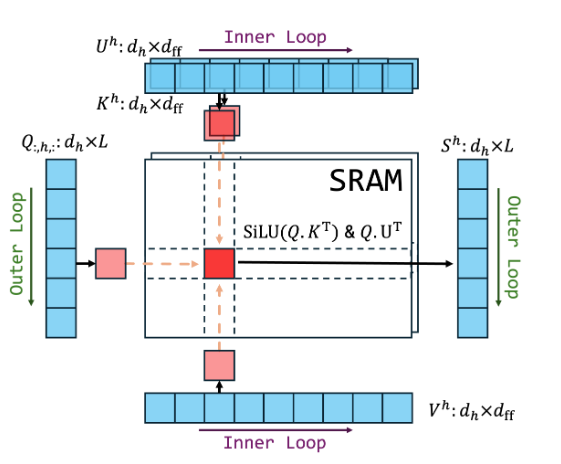
Flash Multi-Head Feed-Forward Network
NeurIPS 2026 Accepted · First author
Software–hardware co-design for an efficient Transformer FFN. Splitting the FFN into heads, the way attention does, improves model quality, but done naively it multiplies the intermediate activation by the number of heads. FlashMHF keeps each head's expansion ratio balanced with parallel sub-networks, and its fused Flash-style kernels, written in ThunderKittens/CUDA and Triton, compute SwiGLU blockwise in SRAM so the intermediate never round-trips through HBM.
We trained models from 128M to 1.3B parameters on NVIDIA H100 GPUs. Against a SwiGLU FFN, FlashMHF improves perplexity and downstream accuracy while cutting peak memory by 3–5× and running inference up to 1.08× faster.
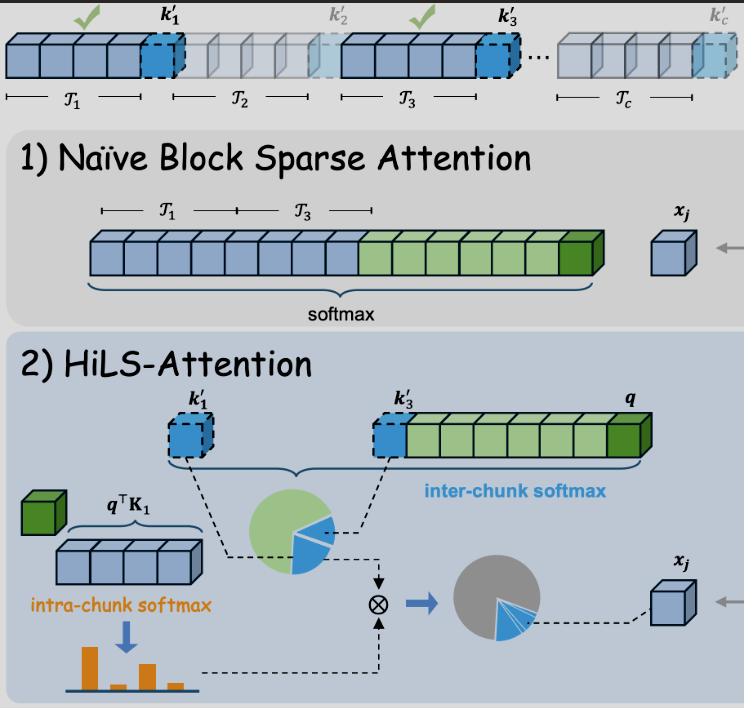
Hierarchical Sparse Attention Done Right
arXiv Preprint, Jul 2026
Built the official SGLang serving backend and reference inference system for learned chunk-wise sparse attention, running on NVIDIA H100 GPUs. It enables 512K-token serving and 64× context-length extrapolation, with up to 13.5× prefill and 15.7× decode speedup over dense attention at 512K context.

AutoPallas & TPU Inference
Internal project
As code owner of AutoPallas, I developed an internal TPU kernel optimization agent with interactive task specification, configurable single-/multi-agent loops, parallel exploration, a strict correctness gate, and reusable optimization trajectories.
I also contributed to Seed’s internal vllm tpu-inference framework. My kernel work included optimizing Pallas paged attention through DMA pipelining and compute scheduling, reducing latency from 184.81μs to 117.16μs at 128K context. I used HLO/LLO analysis and XProf profiling, with XLA as a performance baseline.

FastVideo
Open-Source Project, Oct 2025 - Present
Training and inference infrastructure for video generation and world models. Contributed custom GPU kernels, inference optimization, and quantization-aware distillation, and helped develop the Blackwell-optimized DreamVerse runtime.
Side Projects

MCJev — Real-Time Minecraft PvP Agent
Sep 2026 · 90K+ views on X
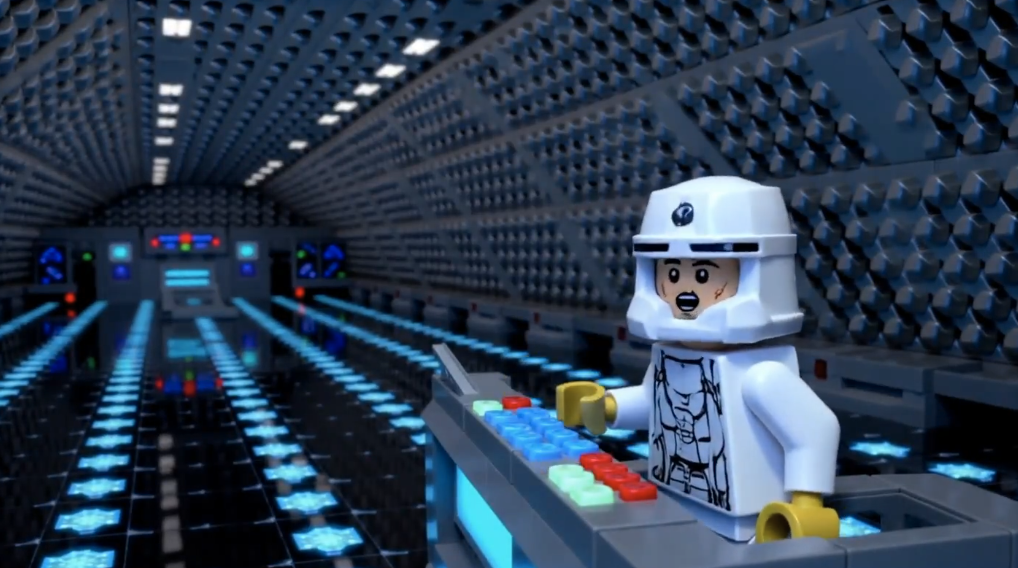
Led the development of a real-time Minecraft PvP agent and multiplayer arena powered by DJev, a diffusion-language-model decision engine that scores candidate actions in a single forward pass, without autoregressive token generation.
Optimized DJev’s serving engine with CUDA Graph replay, KV prefix-cache reuse, FlashAttention integration, and Triton attention kernel tuning. Across live matches before and after deployment, median request-to-answer latency fell from ~60 ms on stock vLLM to ~24 ms with the optimized engine (2.5× faster).
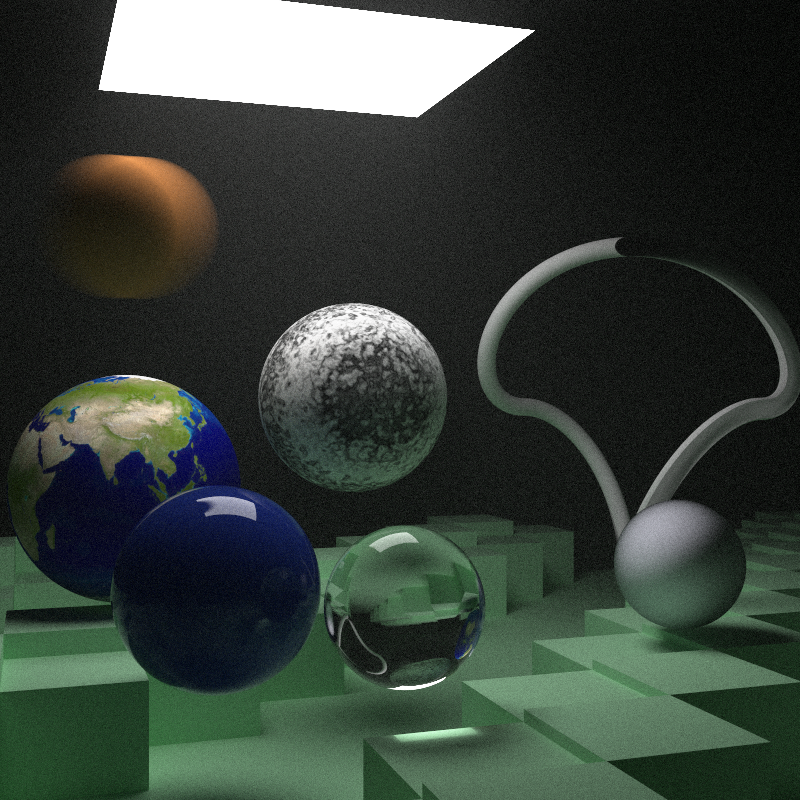
CUDA/C++ Parallel Image Rendering
Personal Project, 2023
Built a C++ path tracer supporting Lambertian, metal, dielectric, and emissive materials. Implemented motion blur, depth of field, and volumetric effects. Accelerated rendering via CUDA parallelization and importance sampling, achieving ~200× speedup vs. single-threaded CPU baseline.
Education

University of California, San Diego
Sep 2025 - Dec 2026 (Expected)Master of Science in Computer Science and Engineering
Teaching Assistant, CSE 291 / DSC 291: Machine Learning Systems
La Jolla, CA

University of California, Berkeley
Aug 2023 - Jan 2024Exchange Student, EECS Department
Berkeley, CA

ShanghaiTech University
Sep 2021 - Jun 2025Bachelor of Engineering in Computer Science and Technology
Shanghai, China